Sunrise beach walk: Laboni to Sugandha
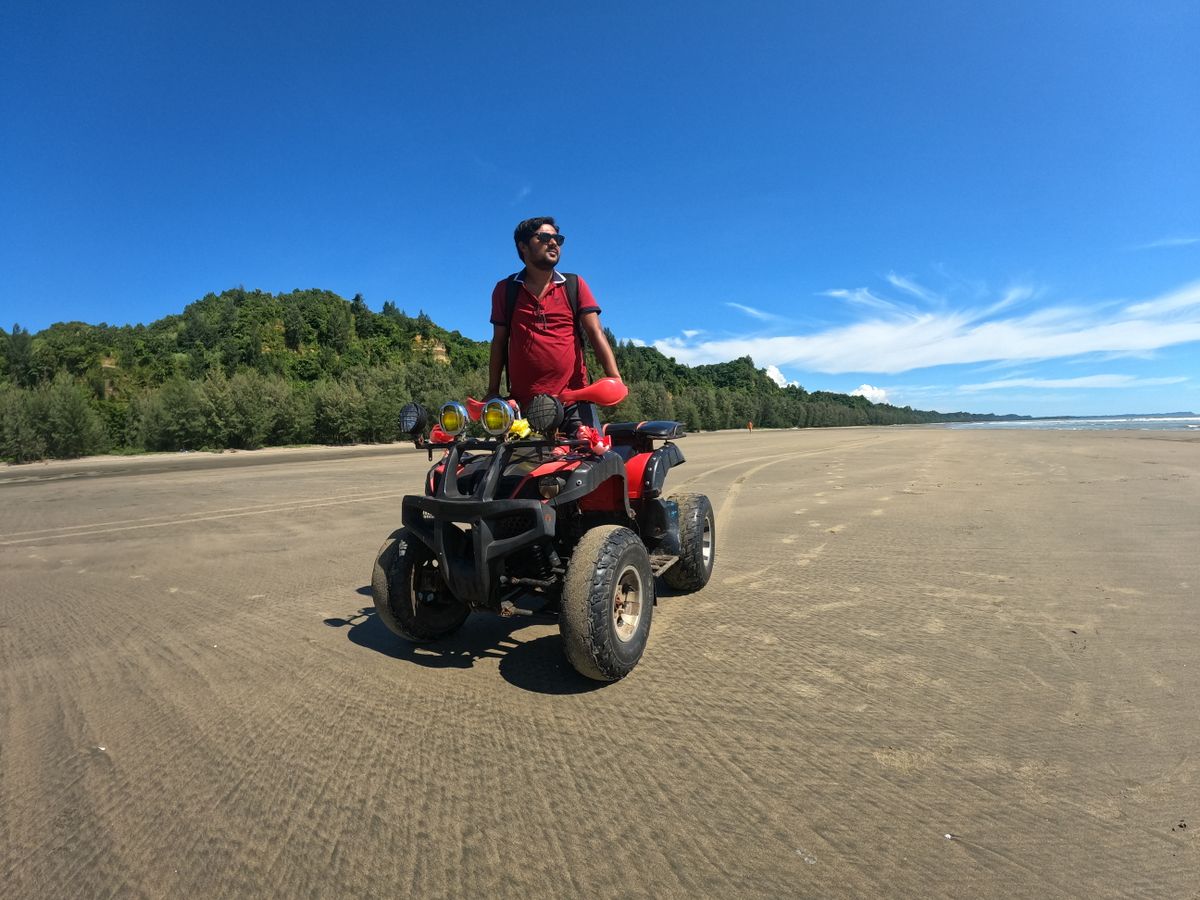
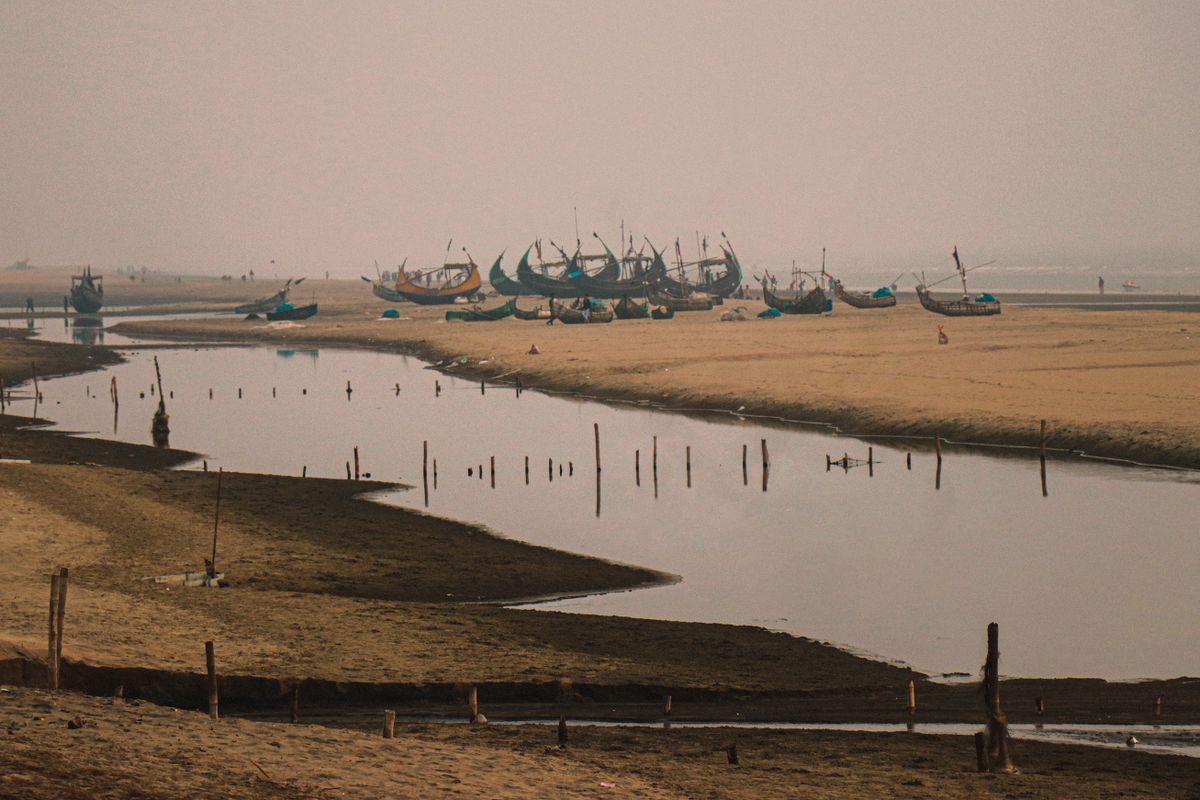
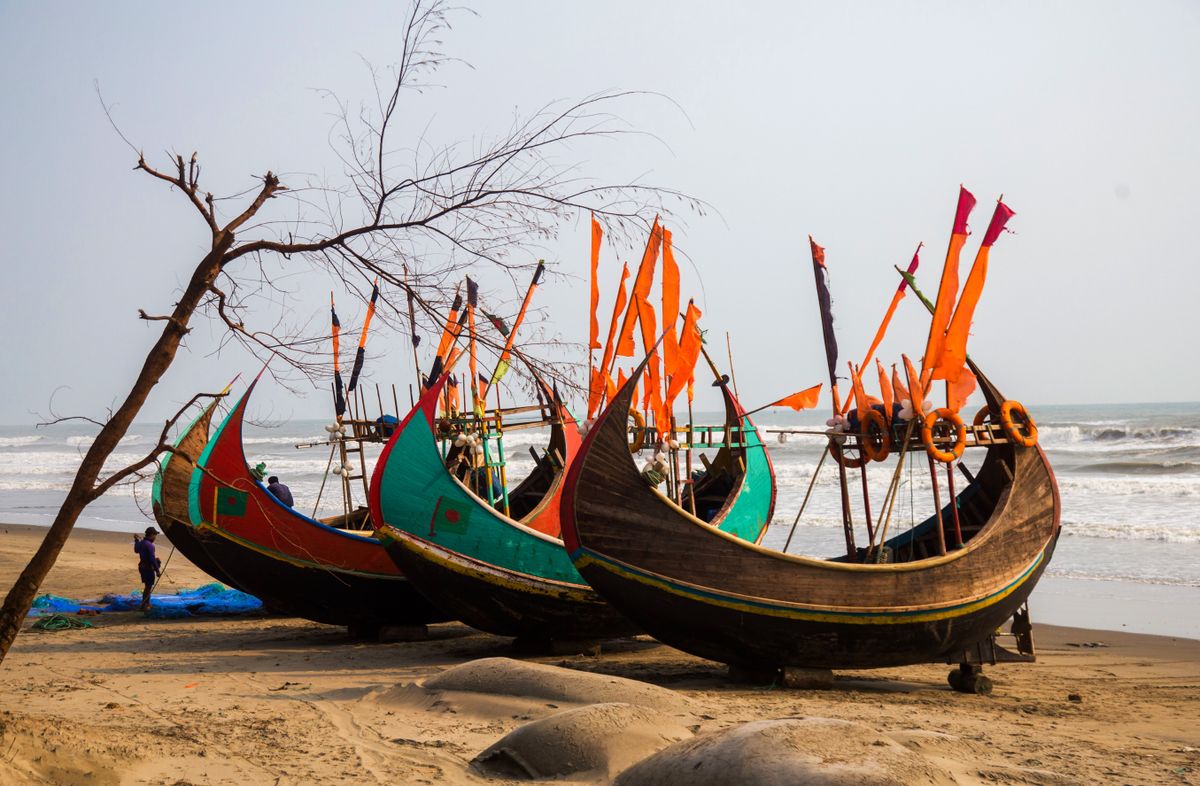
Wake up at 5:30 AM and walk south along the beach from Laboni Point to Sugandha Beach, a 6-km stretch that takes 90 minutes at a slow pace. The sun rises over the Bay of Bengal around 6 AM, and for an hour the sand is nearly empty except for fishermen hauling nets. The light is golden, the air cool, and the scene timeless. Fishing boats line the shore, their painted hulls vivid against the pale sand.
Bring a bottle of water and wear sandals you can rinse—the tide leaves debris. Stop at the beachside tea stalls near Jhaubon for cha (15 taka) and watch the vendors set up for the day. The walk back takes another hour, but by then the beach is waking up and you have seen the best of it. Cost: free, unless you count the tea.
Laboni Fish Market spectacle
Arrive at Laboni Fish Market by 6 AM and watch the auction. Hundreds of fishermen unload overnight catches while buyers crowd around bidding in rapid Bengali. The energy is frantic, the smell overpowering, and the spectacle unforgettable. Hilsa, prawns, crabs, and fish you cannot identify are sold by the kilo. Buyers poke, prod, and argue over quality. It is chaotic, loud, and entirely free to watch.
You are not in the way—tourists are rare enough to be curiosities, not annoyances. Bring a camera if you want photos but ask before pointing it at people. The auction runs until 9 AM, but the peak energy is 6-7:30 AM. Wear shoes you can wash; the ground is wet and fishy. Combine this with the sunrise beach walk for a perfect free morning.
Temple circuit in Ramu
Take a local bus to Ramu (40 taka) and spend the morning visiting Buddhist temples. Lamanchor Temple, U Ottama Monastery, and Joyngkhor Mohashoi are all free to enter, though donations are polite (50-100 taka). The temples are architecturally modest but atmospherically rich—incense smoke, chanting monks, gilded Buddhas, and centuries-old manuscripts. Remove shoes before entering, dress modestly, and ask before photographing inside prayer halls.
Monks often welcome visitors and will explain the history if you show genuine interest. The monastery libraries have Pali texts and murals depicting Jataka tales. Spend two hours wandering between temples, then eat lunch at Ramu Bazaar (80 taka) before catching the bus back. Total cost: 160 taka for round-trip transport and lunch. The temple visits are free.
Himchari trail hike
Take a bus to Himchari National Park (40 taka) and hike the forest trail to the waterfall. The park charges 50 taka entry for locals, sometimes 100 for foreigners, but the trail itself is free and open. The hike is 2 km each way through thick forest with views over the coastline. The waterfall is seasonal—a trickle in winter, a torrent in monsoon—but the walk is the real draw.
Bring water and snacks; the one tea stall charges tourist prices. The trail is shaded, muddy in sections, and takes an hour at a relaxed pace. You will see butterflies, birds, and the occasional monkey. Return the same way and catch the bus back to Cox's Bazar (another 40 taka). Total cost: 120-160 taka including transport and entry. The scenery is priceless.
Sugandha Point sunset
Walk or take a CNG to Sugandha Point at the southern end of the main beach. Arrive 30 minutes before sunset and find a spot on the rocks. The point juts into the bay, offering 180-degree views as the sun drops into the horizon. Locals gather here every evening, and the atmosphere is relaxed—families, couples, solo wanderers all watching the same sky. The light turns orange, then pink, then purple in the span of 20 minutes.
Vendors sell coconut water (40 taka) and roasted corn (30 taka) if you want a snack. Otherwise the experience is entirely free. Stay until the sky fades to blue and the stars appear. Walk back along the beach in the dark, guided by hotel lights and the sound of waves. It costs nothing and delivers the kind of memory you came for.
People-watching at Kolatoli Circle
Kolatoli Circle is the crossroads of Cox's Bazar—CNGs, buses, motorbikes, and pedestrians converge in controlled chaos. Find a tea stall, order cha for 15 taka, and watch. Street vendors sell fruit, flowers, and fried snacks. Families wait for buses. Young men stand in groups debating cricket. The scene is ordinary and endlessly fascinating if you slow down enough to notice. An hour passes without effort.
This is where you see how the town actually functions, stripped of tourist filters. The cha is strong, the plastic stool uncomfortable, and the experience authentic. Cost: one tea. Time spent: as much as you want. No agenda, no destination, just observation.
Questions, answered
Hotels for this guide
See all stays →Curated picks are coming — meanwhile, the live search covers every bookable property at the same price or better.