Sugandha Point: the classic
Sugandha Point juts into the bay at the southern end of the main beach and delivers unobstructed 180-degree sunset views. Arrive 30 minutes before sunset and claim a spot on the rocks. Locals gather here every evening—families, couples, fishermen finishing their day. The atmosphere is relaxed, communal, and entirely free. The sun drops straight into the horizon, turning the water gold, then orange, then deep purple in the span of 20 minutes.
Vendors sell coconut water (40 taka) and roasted corn (30 taka) if you want a snack. The rocks are uneven and slippery when wet—wear shoes with grip. Stay until the sky fades and the first stars appear. The walk back along the beach is dark but safe, guided by hotel lights. Sugandha is the best all-around sunset spot in Cox's Bazar, combining access, views, and local energy.
Inani Beach: empty and expansive
Inani Beach, 27 km south of Cox's Bazar, offers sunsets with minimal crowds. The beach is wider and flatter than the main strip, and by late afternoon you will have long stretches to yourself. The sun sets over the water with the Himchari cliffs as a backdrop to the north. The light is softer here, filtered through coastal haze, and the mood is contemplative.
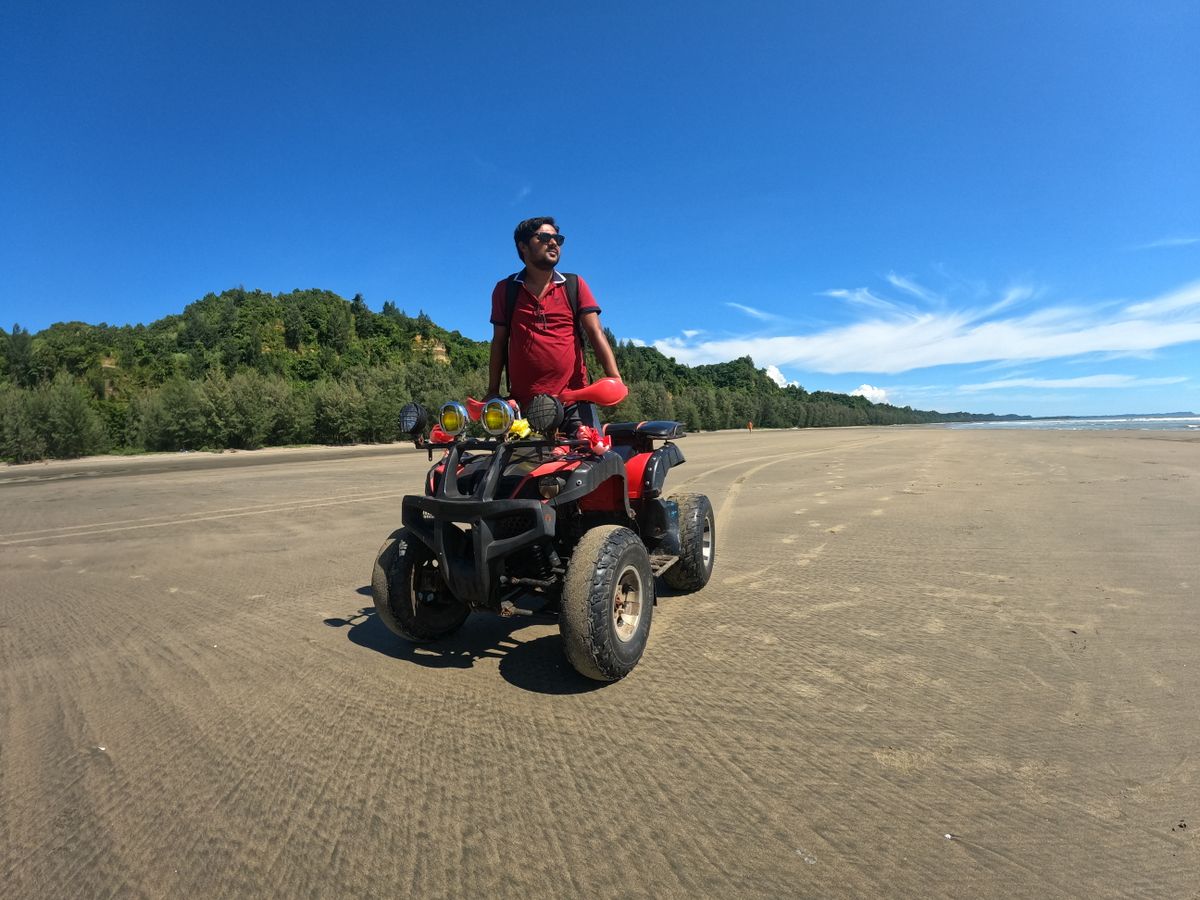
Rent a motorbike and ride down for the afternoon, timing your arrival for 5 PM. Park near Inani Beach Resort, walk north along the sand, and find a quiet section. Bring water and snacks; vendors are scarce. The ride back after dark is scenic but requires careful attention—potholes and stray animals. If you are staying in Inani, walk to the beach from your hotel and linger as long as you want.
Himchari viewpoint: elevated perspective
The viewpoint inside Himchari National Park sits 200 feet above the coastline and offers sweeping views from Cox's Bazar to Inani. The park closes at 5 PM, but if you arrive at 4 PM you can hike to the viewpoint and catch the sunset before staff kick you out. The elevation changes the perspective—you see the curve of the coast, the waves breaking in lines, and the sun sinking behind the hills to the west.
The hike is 20 minutes from the entrance, moderately steep, with railings most of the way. Bring a flashlight for the descent if you linger past 6 PM. Entry is 50-100 taka; the viewpoint is free once inside. This spot works best on clear days when the air is dry. Monsoon haze or cloud cover kills the view. Go in December or January for the sharpest light.
Adinath Temple, Maheshkhali: spiritual sunset
Adinath Temple on Maheshkhali Island sits atop a 300-foot hill with 360-degree views. The climb is 600 steps, and you should time it to reach the top 30 minutes before sunset. The sun drops behind the island interior, casting long shadows over the salt pans and fishing villages below. The temple bells ring at dusk, pilgrims light incense, and the light turns everything amber.
This is not a beach sunset—it is a hilltop, spiritual, slightly surreal experience. The temple welcomes visitors until dark but expect to share the space with Hindu devotees. Remove shoes, cover shoulders, and be respectful. Bring a flashlight for the descent; the steps are unlit and treacherous after dark. Ferries back to the mainland run until 6 PM, so plan to stay the night on the island or leave before sunset if you need to return.
Laboni Point rocks
Laboni Point has a cluster of large rocks at the northern end of the main beach where waves crash and spray. The rocks are climbable, and the top offers a raised view over the bay. Sunset here is dramatic—waves hit the rocks, the spray catches the light, and the energy is raw. This spot draws photographers and couples; it can get crowded on weekends.
Arrive early to claim a good rock. The surface is rough and barnacled—wear closed shoes. Bring a towel if you plan to sit; the rocks are damp and covered in salt residue. The sun sets to your right (west), and the light reflects off the water in shifting bands of color. Stay aware of the tide; rising water can cut off access to some rocks. This is a 10-minute walk from most Kolatoli hotels, making it the most convenient sunset option.
Marine Drive overlook near Jhaubon
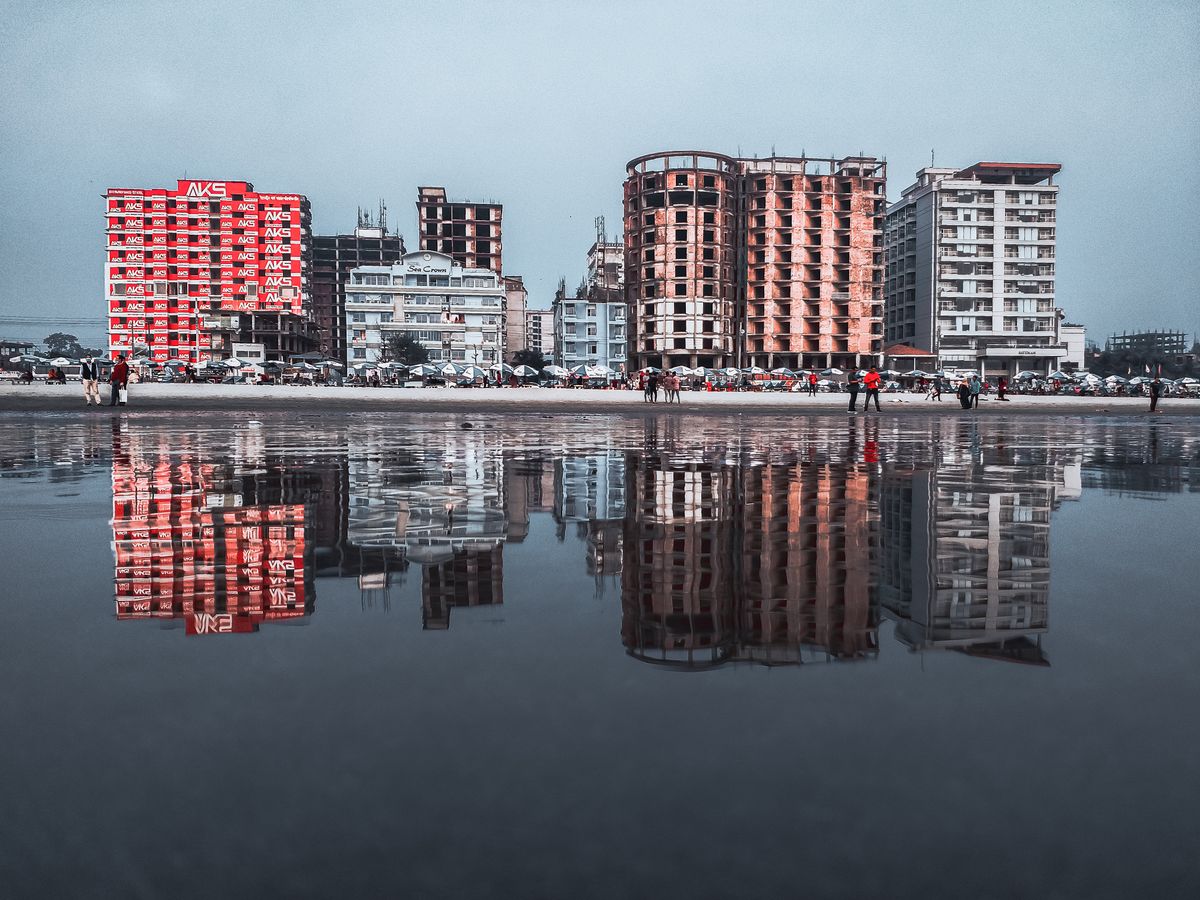
A raised section of Marine Drive near Jhaubon has a pullout with benches facing the ocean. It is not scenic in a wild sense, but it offers a different vantage—cars and CNGs streaming past, vendors selling snacks, locals stopping to watch the sunset while standing beside their motorbikes. The energy is urban, communal, and very Bangladeshi.
Order sugarcane juice (20 taka) from a cart and sit on a bench. The sun sets behind the hotels to your left, casting long shadows across the road. This spot works if you want a sunset without effort—no hiking, no walking on sand, just show up and watch. It lacks the romance of Sugandha or Inani but captures the everyday rhythm of the town. Combine it with a walk to Mermaid Cafe for post-sunset gelato.
What to bring
Water, especially if you are hiking or biking to remote spots. A light jacket—the temperature drops fast after sunset. A flashlight if you plan to linger into dusk. Sunscreen for the hour before sunset when UV is still strong. Camera or phone, obviously. Small bills for vendors selling coconut water, corn, or tea. Bring a companion if possible; sunsets are better shared, and some spots are isolated after dark.
Questions, answered
Hotels for this guide
See all stays →Curated picks are coming — meanwhile, the live search covers every bookable property at the same price or better.